Thursday, June 25, 2009

Moonwalker

He was a man, take him for all in all. I shall not look upon his like again.
- Hamlet

Michael Jackson
1958-2009

A Tale of Two Cirques

I recently visited Las Vegas and had the rare and expensive opportunity to view not one, but two, Cirque du Soleil shows: KÀ and Zumanity. Both shows surprised me with how different they were from my preconceptions of what Cirque du Soleil was. Like most people, I had a passing familiarity with Cirque: acrobats in colorful skintights, extreme contortionism, and that dude who lies on top of that other dude.

Yeah, that’s the one.

I had my first glimpse of Cirque as a child, viewing the televised versions on Bravo. Though strange and impressive, I thought the acts were sort of one-note – supremely flexible people doing unconscionably weird things with their bodies. I suppose these French Canadian wunderkinds were rescuing the circus from the likes of Bozo clowns and the guy fighting a lion with only a whip and a tiny chair. Now, the concept is so popular that there are six Cirque du Soleil shows in residence in major Vegas casinos, and it seems that you’re not hardcore as a casino until you score a Cirque show. I’ve even seen a Cirque-style show (knockoff?) at Sea World; their Cirque de la Mer is the Cirque formula with jet skis.

Going in to the first show, KÀ, I had an ominous feeling that I would not be amused. I think I had some notion that Cirque was an overly precious bourgeois kind of entertainment, lacking the history and gravity of the theater or opera worlds, as well as the glitz and youthful exuberance of a rock concert.

Here are my impressions of the two shows. (Warning: Spoilers and adult situations ensue.)

KÀ


KÀ, at the MGM Grand, has the distinction of being the first Cirque show with a true narrative. That doesn’t mean there’s any talking, aside from a brief prologue voice-over. It’s more like watching a Tchaikovsky ballet, where the music and dance tell a story without words. Actually, what’s special about KÀ is that it’s like many different art forms at once. It’s like a ballet or silent stage play in its presentation, but there’s also an epic feel and emphasis on technology that make it about as cinematic as live performance gets. The cup holders and surround speakers built into the seats make it feel even more like being at the movies. It’s also a lot like one of those stunt shows at Universal Studios, with the enormous infrastructure and audience interaction before the show. In a less than enthralling way, it even feels like an amusement park ride, when staff members go around taking your picture and then giving you the option of purchasing the photo after the show.

I was skeptical about whether the show would be worth the exorbitant cost, which, even after student discounts and seasonal promotions, averages about $70 for the mid-range seats (we’re talking about $150 regular price for the best seats). Cirque du Soleil is notorious for its steep sticker prices, so I would be happy with nothing less than being utterly blown away. Well sir, consider yourself blown. KÀ is an amazing show, and unlike anything I’ve ever seen.

That’s a cliché statement, but think about how rare it is that you actually see something and don’t immediately categorize it as a type, another example of a style you’ve experienced many times over. A movie, a play, a sporting event, a museum, etc. – only the finest examples really slap you in the face and make you wonder, “What did I just see?” Otherwise, a movie is just a movie, and you don’t feel like you’ve experienced something more.

The story of KÀ, as a “story,” is rather minimal, and not always easy to follow. Two imperial twins, brother and sister, are separated from each other when enemy forces attack. They endure various adventures before finding each other again and reclaiming their rightful place. There’s a vaguely Chinese/Asian feel to the show, with a heavy emphasis on martial arts action and Asian-style costuming.

In addition to martial arts, KÀ has straight-up acrobatics, just as I expected from a Cirque show. But the show isn’t about acrobatics or any kind of athletic prowess as an end in itself. Rather, the human physique is placed in the service of a visionary dream. KÀ consists of a series of brilliant set pieces that don’t necessarily make up a great story, but individually, the pieces are gorgeous and, at their best, poetic.

My favorite section involved the twin sister being tossed overboard into the ocean during a storm. The thrashing ship, impressive on its own, gives way to the serene sight of the girl falling slowly down the entire height of the theater. Images of bubbles and watery ripples are projected onto a transparent screen at the front of the stage to render a perfectly convincing scene of a girl sinking deeper into the ocean. Then we see her find her bearings and swim downward to save her nursemaid who is in danger of drowning. It ends with the girl swimming upward to the surface, nursemaid in tow. The scene is simple and sparse, accompanied by a beautifully simple melody. I know what it is and what technology was employed, and yet I’ve never seen anything like it.

KÀ is as much about technology as acrobatics, and the most impressive piece of technology is the stage itself. It’s a floating platform operated by a gigantic robotic arm, and it seems to spend most of the show tilted toward the audience at various angles, so that the cast is constantly performing on a slant. At one point, after a scene at the beach, the stage goes completely vertical facing the audience, thus dumping I don’t know how many pounds of sand in a shimmering cascade into the pit below (I’ve read that the “sand” is actually cork).

I thought I had really seen something there, but the climactic battle scenes of the show involve the cast clashing on the same vertically-oriented stage. The cast members are in harnesses and suspended by wires, of course, and it created a melee in 2-D, kind of like a moving painting, with swordsmen flying all across a stationary background.

Even that was not as much fun as another use of the vertical stage: at one point, thin posts protruded from all over the face of the stage. The acrobats proceeded to chase and fight each other by swinging and climbing from post to post, all without wires or support. I saw one guy falling from the top to the bottom through the posts, shifting from side to side; it was like watching human Plinko.

There’s much more to the show, including shadow puppets, rock-climbing, aerial tissu, the wheel of death, archers shooting what looked to be real arrows over the cast-filled stage, and some small-scale pyrotechnics. It’s all accompanied by a grand score, the kind of music someone would write for a movie if told that the music would take center stage instead of the actors.

I came out of KÀ with enormous respect for what Cirque du Soleil is all about: challenging established art forms and melding them together to create new experiences in live performance. What began as a band of preternatural acrobats is now almost a myth-making enterprise. I don’t think it’s an accident that each Cirque show is given a meant-to-be iconic name (Mystere, O, Love, Varekai, etc.), as if they are new worlds in themselves.

Zumanity


Zumanity, at New York New York, has the distinction of being the first 18-and-over (aka “R-Rated”) Cirque show. From the name, I had originally thought that the show might have something to do animals, maybe even animals versus humans, à la Grizzly Man; I was sorely disappointed. Zumanity is essentially a cabaret-style burlesque show with acrobatics. Like KÀ, Zumanity is a series of set pieces, but without the narrative and the brilliance. There is near constant nudity, but surprisingly, it doesn’t make up for the lack of fun.

Admittedly, having seen KÀ the previous night, I couldn’t help judging Zumanity against it. Most of what I liked about the former was absent from the latter. In place of an army of cast members, Zumanity offered numbers focusing on couples and individuals. Instead of technology, we were given intimacy. The by turns martial and dreamlike score of KÀ gave way to dirges rooted in bluesy saxophone. Warriors in Asian robes were replaced by a woman in ass-less pants.

The best part of Zumanity came before the actual show started, in the pre-show banter and audience interaction. Bawdy cast members would take turns smothering defenseless audience members in their unyielding bosoms. Flamboyant male actors would bait some of the men in the seats into homoerotic innuendo. Ironically, the more the men resisted, the gayer they seemed. The lady doth protest too much?

By the time the 7-foot-tall drag queen came out to MC the night’s festivities, I was ready for an entertainment distinct from KÀ, but just as engaging. And yet the show, from its structure to its music to its acrobatics to its cringe-worthy attempts at humor, just didn’t do it for me. (This was a show that thought funny was an out-of-shape woman using liquid-filled Ziploc bags as breast enhancement devices.)

Numbers include two girls writhing in an oversized fishbowl, a young Fabio lookalike doing a strip tease, and two chiseled dudes engaged in what can only be described as steel cage tango-wrestling. None of the numbers were really bad, though I’m sure I would have been more impressed with the aerial work if I hadn’t already seen the same thing for free at Circus Circus earlier in the day. I was mostly disappointed by the unnatural attempt to marry a sex show with a circus show.

There is enough raw sexuality in the sight of a woman spinning and flipping her body in mid-air while clinging to a strip of aerial silk. Having her do it topless is not only overkill, but it distracts the viewer from the beauty of the movement, leaving it with a tawdry feel. Most of the pieces gave me the same uneasy feeling of stumbling upon some great acrobats who were trying too hard to be exotic dancers.

The most impressive performance of the night was also the most inappropriate. A solo contortionist took the stage, just a bony dude in short shorts who could twist his body into one godless position after another. He was a methodical loon, maintaining a feral grin on his face as he robotically went through his routine. He’s kind of what might happen if people were Transformers. He had me hooked as no other part of the show did. But what on earth did this sickboy have to do with the “sensual side of Cirque du Soleil”? Aside from a stomach-turning suggestion made by the MC that the man could do a self-inflicted crotchplant, I didn’t see any connection between his brand of contortionism and the show’s stated goal of titillation. Especially as a solo act!

For some sad reason, the show ended not with a bang-up group number, but with the MC inviting an old couple on stage and having them do a slow dance to celebrate their 40 years of marriage. Really? This is the right way for the reinvention of burlesque to climax? There is something subtly sadomasochistic about Cirque du Soleil as a whole. I mean, look at all the ropes and the dangling and the bodies bent double over themselves. But instead of playing that up and taking it to its natural conclusion, Zumanity misguidedly tries to serve lechery and romance on the same plate, and ends up shortchanging the hungry audience on both counts. When the MC asked a guy in the front row what he was going to do after the show, it’s no wonder that his response of “Have sex?” sounded more like a question than a statement.

Ultimately, the problem with Zumanity is that it doesn’t do justice to either burlesque or Cirque du Soleil. (I’ve heard the same problem afflicts another of their shows: Criss Angel Believe, Cirque fused with illusionism.) They are impressive enough as acrobats, and they provide the “sex,” but they’re missing the all-important next word: “appeal.”

Monday, June 1, 2009

Happy Birthday, Jar Jar!


May 19, 2009, marked the tenth anniversary of the release of Star Wars Episode I: The Phantom Menace, and its hapless hero, Jar Jar Binks. As Jar Jar would say, “Yee gods! Meesa shocked at such long time passing!” Ten years, the age of Anakin Skywalker in the movie, when he met the Christ-looking Jedi master; the impetuous Padawan who would become father, mentor, brother, rival, and finally lightsaber-fodder to him; and that sexy older woman he would make his own. Ten years. Seems like a good time to look back.

Phantom Menace came out while I was in college, and was borne on a sail barge of hype that probably no other movie will ever again command. I purchased tickets online for the midnight premiere at Ford City, a suburban mall on Chicago’s South Side, far south of the University of Chicago. This was a time when midnight showings were pretty much unheard of, aside from the cult of The Rocky Horror Picture Show. This was a time before every mall you drove by had the name “Westfield” emblazoned on it. This was a time when online purchases were still new and unfamiliar enough to make me nervous about sending my credit card number into cyberspace. Amazon.com had just the “books” and “music” tabs back then, and the website was actually soliciting advice for its soon-to-arrive classical music store.

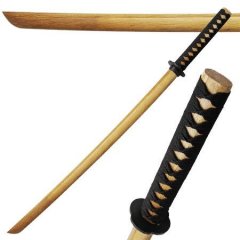
I and my best friend, Zach, made the journey down to Ford City together. He was the logistics man, planning out the series of bus exchanges that would take us there. Back then, as now, and ever since the prehistoric Greater Lake Chicago receded thousands of years ago, the South Side of Chicago was known as a wretched hive of scum and villainy. And enlightened though I was about civic relations, it was hard at that age to ignore such old saws as “Don’t go south of 60th Street.” That’s right where the University ended. Ford City was down on 76th Street. But it was a mall with a movie theater and it was showing Star Wars to hundreds of salivating fans, so how bad could it be? Zach strapped his wooden kendo sword to his back, just in case.

I’ll never forget that night, but the iconic image of the trip was the face of a black man on the bus as he stared at me, eyes as round and alarming as thermal detonators. Zach and I were the only non-black people on that bus. I sat nonchalantly, I thought, like a rookie football player reaching the end zone for the first time, knowing that it was best to act like “you had been there before.” Slowly, however, I sensed a disturbance in the Force. I turned my head to see that just across the aisle, a middle-aged man was gazing at me, not at all trying to hide the fact. I looked back, just because I thought it would be less offensive than to look away, and he just kept on staring at me with an expression that was one part bemusement, one part shock, and three parts utter bafflement. His expression changed not a whit, not even to blink. I thought I saw tears glazing over his eyeballs just to keep them moist. I’m sure he was just surprised to see a Chinese college boy on a South Side bus in the middle of the night. Hey, I was surprised to be that Chinese college boy. He probably doesn’t remember me, but much as a certain farmboy couldn’t get the image of a certain mysterious white-gowned princess out of his head, the image of that man and his bulbous eyes remains embedded in my memory.

At the theater, we saw some fellow U of C students, some with plastic lightsabers in hand, as well as dozens of other Star Wars devotees waiting for the midnight start time. But to my disappointment, there were no overtly delusional fanboys, as the media had led me to expect, with its stories of all manner of Jawas and Jedi standing in line for months. There was no one in full Chewbacca garb, nobody singing “Yub Nub,” no “I am your father” reenactments (random recitation, yes, but true reenactments, no).

If this were a movie review, I would write about the thrilling CG podrace, the light-speed two-on-one lightsaber duel, the music that only John Williams could write, the gratifying and inventive fan-service (C-3PO naked!), and whether the movie was worth the wait. I think it’s enough to say that the first note of the Star Wars fanfare and the first glimpse of the Star Wars logo, both unchanged from their 1970s glory, were greeted with the happiest response I’ve ever seen in a mass audience. I wanted to cry but hold it back, so that people could see me holding it back and thus appreciate how emotional I was. But I don’t think I held anything back, and I don’t think anyone was looking at anything other than the screen.

* * *

I can’t remember how long we waited for the bus, but by the time we realized it wasn’t coming, there wasn’t a soul around. All those Force-junkies had taken their landspeeders home; apparently, we were the only Padawans foolish enough to rely on public transit. There we were, maybe 3:30 in the morning, staring at an endlessly desolate parking lot, like the painfully featureless CG battlefields of Naboo. “Weesa in big doodoo,” I thought.

Checking the fine print on the bus schedule, we realized our mistake: the bus only ran certain hours, and not the hours we needed. We could either wait for dawn or walk to a station with an all-hours bus route. Why we chose the latter, I don’t remember. Don’t tell Yoda, but I guess we preferred adventure to patience.

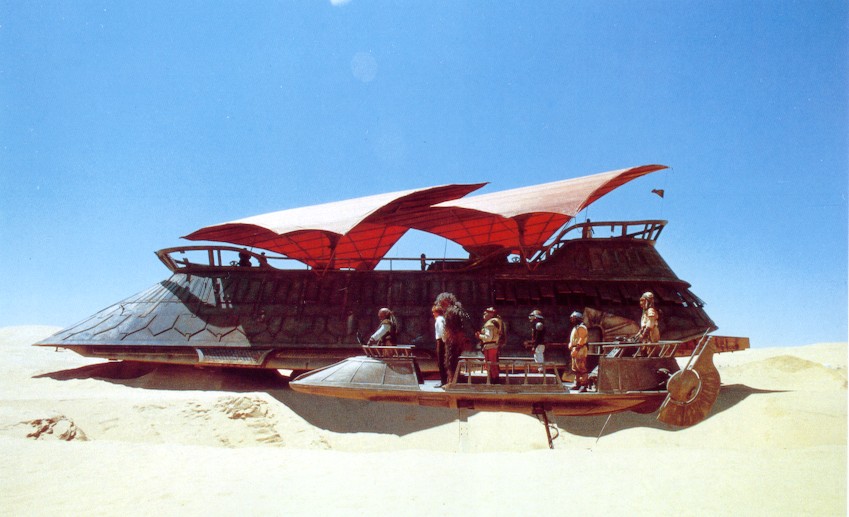
I’d like to say we were like Anakin and Obi-Wan, brothers of the lightsaber, venturing side by side. However, I fear we were more like C-3PO and R2-D2, two bumblers wandering aimlessly through the treacherous Tatooine desert. We walked through residential neighborhoods full of modest houses and quiet streets. We walked on noisier streets, too, which in a way were more comforting. And though I was nervous and would still be nervous to walk in a strange neighborhood in the middle of the night, I looked at Zach and thought how lucky I was to be with my friend and to do this unlikely thing together. We took confidence in our good spirits and each other . . . and that wooden kendo sword. And as far as treachery, we found none.

I went to midnight premieres of the next two Star Wars prequels in 2002 and 2005. I would have been disgraced if I had waited for the morning. And as movies, I enjoyed them even more than Phantom Menace. My only regret is that I didn’t get to see them with Zach. I think the second time around, we would have been a bit more like Anakin and Obi-Wan (Episode II-style, not so much Episode III).

Tuesday, May 5, 2009

Play it again, Sir Fratley

In response to a recent blog post . . .

For years, I thought I was an RPG player of lordly caliber. It struck me like the Light of Judgment to realize I wasn’t an RPG fan. I was a Final Fantasy fan.

A few years ago, having vanquished nearly every Final Fantasy that was available stateside, including the most recent title, FFX, it occurred to me that I didn’t actually like RPGs much. I thought of the parade of abandoned RPGs in my history: Dragon Warrior, Breath of Fire, Seventh Saga, Robotrek, Secret of Evermore, Xenogears, Tactics Ogre: The Knight of Lodis, etc. Even a game that charmed and amused me, Super Mario RPG, was left unfinished. All genera were represented: fantasy, medieval, futuristic, strategic, comic. None could hold me.

And then I tried to think of non-FF RPGs I had actually beaten. Chrono Trigger, a perfect game, and perfectly redolent of the Final Fantasy aroma left by Hironobu and company. Final Fantasy Legend II and III, two good games rebranded for the Western market, but let’s not fool ourselves – they would wet themselves at being called “FF-lite.”

Others? Uh . . . Tales of Symphonia and Tales of Destiny 2? Games I likely would have skipped if not for the multi-player feature. Final Fantasy Crystal Chronicles? Despite the FF brand, I most assuredly would not have played the single-player mode. I hardly saw these last three titles as RPGs; to me, they were superlative three-man beat ‘em ups that I could share with my brother and sister.

Oh yes, there was Final Fantasy: Mystic Quest. Am I the only one who found some of that game’s puzzles to be infuriatingly taxing to a degree rarely plumbed by the main series? No matter; it was a forgotten curiosity – fun, but clearly the Sir Fratley of the FF lineage.

Most of the games above would not have existed if not for Final Fantasy. All except Dragon Warrior owe something to Final Fantasy. But the relevant point for my gaming life is that I bought all of the above games only because when I was in sixth grade, I played the original Final Fantasy, and ever since, I hoped to find something just as good. Other than Chrono Trigger, the only single-player RPGs that were ever as good as Final Fantasy were later Final Fantasies.

What made Final Fantasy special? It was never the genre that enthralled me. Sure, my fingers weren’t as nimble as some, and never in a million years would I ever beat a Contra or Mega Man game (legitimately). So I appreciated the menu-based clashes that RPGs ushered in. I can say this looking back, but at the time, playing the first FF, I didn’t consciously think to myself, “I’m glad this game doesn’t require manual dexterity,” or “Wow, it sure is fun to buy new weapons and armor all the time.” The RPG-specific elements were incidental to my experience.

What Final Fantasy has that most other RPGs (or games in general) don’t is the ability to make you feel like you’re experiencing more than a game, more than a series of button presses and pattern recognition.

All great games do this. Street Fighter is as technical a game as there is, but when you’re in the heat of the fight, that’s real heat, not a mechanical expression of button-pressing. Just the other day, I had a blissful run on the Garibaldi course using Kaori in SSX Tricky. No wipeouts, no collisions, but also no forced tricks or showboating. Just making the most of the game’s design without even realizing that I was manipulating a design. I was just there on that mountain.

A great gaming experience happens when the game creates visceral drama and passion in the player. RPGs try to do this with story, and for the most part, Final Fantasy has succeeded.

Glib gaming commentators often repeat the refrain that each successive FF is not a “true sequel” to the last. Alas, they never seem to be going anywhere with this observation, which is unfortunate, because to me, FF’s “non-sequel-ness” is the point. Final Fantasy is uniquely brilliant among gaming franchises because each game is a radically different experience from the last, despite not being radically different in its mechanics. Whereas most other series, when calving sequels, alter as little as they can about the aesthetic and gameplay of the original, for fear of alienating fans, each Final Fantasy game feels like it’s made from scratch. Again, not primarily the mechanics, but the story.

Yes, at the most basic level, the story is always: band of unlikely young do-gooders saves the world through unity and perseverance. But it’s the milieu, the aesthetic, the tone, the characters – so much detail goes into the FF world, so that it feels like a different world to save every time. The earthy domesticity of FFVIII feels nothing like the gritty fatalism of FFVII. Saving the world with Zidane in FFIX is meant to evoke the classic SNES era adventures, and yet its lyrical whimsy bears little resemblance to the martial grandeur of FFVI or the guileless romanticism of FFIV. Though we treasure that certain FF-ness that is part of the feel of each title, it’s the surprises that excite us, much more than the familiarity.

Playing FFVII, then playing FFVIII, is like reading Oliver Twist, then reading David Copperfield. On the contrary, playing Super Mario Sunshine, then playing Super Mario Galaxy, for example, is like reading Alice’s Adventures in Wonderland, then reading Through the Looking Glass.

The former is like living in two different worlds. The latter is like living in two parts of the same world. Both are great experiences, but the difference is enormous, and the FF way is much rarer in the gaming universe. Which makes me question just how long it can go on. It’s already come crashing down like an injured airship in FFXII. For all my complaints about always feeling like a eunuch during battles, it’s the turgid storytelling that is sinking that game.

How many more great stories can Square-Enix come up with? I’m not sure, but I know that I will keep looking to Final Fantasy as the gold standard for great storytelling that turns a game into a living dream. I will look to Final Fantasy for the next game that can make me feel the way I did as a 12-year-old boy, mowing down imps on the plains of Coneria, sailing my airship over the continents, confronting the dreaded Garland, who was really Chaos, because he sent himself into the past, or rather into the future, then I went to the past, and somehow I killed him in two places, but he was stronger in the past, but then really weak in the future, and I don’t know how that happened, but I think he was the same guy, even though they looked different, and I can’t believe we survived an era with no save points in dungeons! . . . and, anyway, you get the idea.

Tuesday, April 28, 2009

Why ask why?

Mise-en-scène:

A pleasant feeling of waking in the morning and ambling downstairs to the living room. I hear the familiar sounds of a tennis match, batted balls and squeaking sneakers. I walk toward the television, and the scene comes into focus – but strangely. I think I see a half-size tennis court on the screen, with revelers far too close to the action. Warzard sits in an easy-chair next to me, his face unmoved by the broadcast.

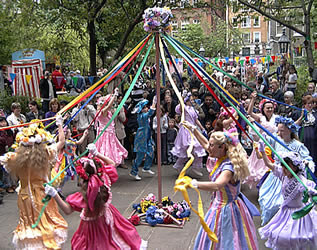
I take a closer look: it appears to be Mary Pierce playing in the far court, with the near-court player’s back to me. And then my vision sharpens, and the scene goes askew. Between Mary and the other player, I see Monica Seles in the middle of the court, bound at the wrist to a maypole. There’s no net; the two players exchange light volleys, badminton-style, with Monica in between them attempting to swat the balls down. An exhibition match of the most juvenile variety? We should be so lucky. No, I need to take my eyes off the action for a second to see the real exhibition: the players. They’re naked. But for a parti-colored lanyard round her neck, there stands Mary Pierce in all her stark naked glory. Monica and the unidentified near-court player as well.

Monica snares an interception. The crowd roars like it’s 1992 all over again. But no, there’s no player swap; Monica stays at the maypole for the next exchange.

I look to Warzard for some enlightenment:

Czardoz: Naked tennis?
Warzard: Rupert.
Czardoz: Rupert?
Warzard: Rupert Murdoch.
Czardoz: Oh, is this some kind of private party he’s holding?
Warzard: Yeah.
Czardoz: Why are they naked?
Warzard: You know, bribes, money, the usual.
Czardoz: Oh. . . But . . . why is all this happening? Why is it on TV?
Warzard: I don’t know.

And why should he have to know? Ours is not to reason why. Ours is but to do and die. I thought gravely to myself, perhaps this is what our boys died for in Fallujah.

An unwelcome noise, and I woke from the dream. And all that remains is a beautiful memory.

Wednesday, March 11, 2009

Watchmen: A Simulacrum (Accept no imitations?)

Thank God for these good men, but say, “I also am a man.” Imitation cannot go above its model. The imitator dooms himself to hopeless mediocrity. The inventor did it, because it was natural to him, and so in him it has a charm. In the imitator, something else is natural, and he bereaves himself of his own beauty, to come short of another man’s.
- Emerson, Divinity School Address
(This article contains SPOILERS.)

The film adaptation of Watchmen has reached critical mass, and apparently, its opening weekend box office was Hiroshima-sized, but for this intellectual property, two Hiroshimas were needed to provide validation for all the hype, not to mention the rabid fans.

The movie is fun to watch. Also tiring, not so much because of length, but rather breadth. After watching it, I was interested enough to take in some critical reviews of the movie, just to see if other people saw something in it that I missed. A common criticism was that anyone who was not already familiar with the book would get nothing out of this movie (another strange theme: the critics all seem to have read the book, perhaps as teenagers?). I disagree, since I have never read Watchmen and knew nothing about the story until I started reading a few previews and articles about the movie. I avoided early reviews so as not to ruin the story for myself. In fact, the first time I saw the trailer, I thought that the three blue guys were malevolently serene alien invaders, especially since one of them had earlier exploded a bunch of humans, probably while suppressing a yawn. Turned out that the Blue Man Group on radioactive steroids was actually a singular “good” guy, and the so-called humans were merely Viet Cong. (As Rorschach would say, “Men get arrested. Dogs get put down.”)

I liked the movie overall, but it did have problems.

Example: How can the “world’s smartest man” also be the world’s fastest man? It hardly seems fair. I hesitate to say “world’s strongest man,” but Adrian Veidt did go toe to toe with two of the world’s most awesome fighters at the same time and dismissed them like that Fancy Feast cat dismissing some Meow Mix. And why only so late in the movie do we learn that in addition to his globular brain, the remarkably feline Ozymandias also has quick-chops the envy of a Ginsu knife? I forgive him a little because my favorite image from the movie was of him in his purple suit clobbering a hitman with a metal queue post in slow-mo.

Example: How did Dr. Manhattan ever become part of the club? Perhaps this is an instance of previous knowledge of the book being helpful, but nothing in the movie tells me why the guy who became Mr. Indifferent-to-the-world in 1959 would much later make himself part of a group of all-too-human vigilantes. What, did Nixon introduce him to the masks?

Example: Blue tiger with horns. What the hell? Later research revealed that there is a story behind this reject from the Island of Dr. Moreau, but no explanation appears in the movie. It’s just there. “Visionary” director Zack Snyder couldn't be bothered to offer either a little restraint or a little context?

Critics agree that Jackie Earle Haley steals the show as the growling, uncompromising Rorschach, and I think they’re right. The inkblot mask is interesting, but Haley really terrifies the movie itself into submission when the mask comes off, and we see his savage face, like a shaved Wolfman.

Not many critics give enough credit to Patrick Wilson’s performance as Daniel Dreiberg (Nite Owl II), who is the most “real” of the Watchmen, the kind of guy you could have a beer with (as, indeed, we see in the movie). Malin Akerman is deathly boring as Silk Spectre II; her mom (Carla Gugino) was better-acted and better-dressed. I’ve always enjoyed Billy Crudup’s priceless voice, and it works for Dr. Manhattan, but I just couldn’t find myself drawn to the CG character (“cute dong” notwithstanding), not after Crudup’s sympathetic face is shown in agony as he’s obliterated, wristwatch in hand. I enjoyed Matthew Goode as Adrian Veidt (Ozymandias), accent and flamboyant suits and all. Honestly, I wanted to see him as the hero of the movie, which probably earns me the bile of Watchmaniacs everywhere. Lastly of the “heroes,” Jeffrey Dean Morgan’s portrayal of the Comedian made me admire the actor, something like a fatter Robert Downey, Jr., raised on pork chops and coal-mining, but at the same time, it made me hate the movie a little bit.

Some critics have lumped the Comedian and Rorschach together as examples of the movie’s indulgence for sociopathic excess, but I don’t see it that way. To me, the Comedian’s violence and mercilessness are ends in themselves, his own nihilistic fantasy where he plays court jester to an empty throne. Rorschach, on the other hand, fights not so much because he’s angry (or insane), but because the rest of us cowards won’t. Or rather, his anger grows from seeing how the rest of us cringe and demur. And yet he leaves a journal so that others will know what he saw. Can you imagine the Comedian giving a damn about opening people’s eyes? The movie piles on scene after scene of his vileness, to the point where a story that starts ostensibly as an investigation into who killed him in the opening scene ends with me happy he got tossed through that window, and not caring who did the deed. So what’s the point? That only fools would root for costumed vigilantes?

Comparisons to The Dark Knight, though perhaps unfair, are inevitable, and many critics have juxtaposed the two. Both were meant, either by their creators or their proponents, to elevate the “superhero movie” to equal standing with Hollywood’s prestige genres (whatever those happen to be!).

The Dark Knight is a stridently Greek interpretation of tragic heroism and the depths to which all men can fall, intertwined with the modern mythos of the superhero as the one man who can (and must) make the sacrifices the rest of us can’t. Watchmen, on the other hand, seems to suggest that the so-called heroes, and heroism itself, are either false deities or that thing inside us that we lie to ourselves about.

I’m a Greek at heart, and I think that whereas The Dark Knight probes intensely personal territory, Watchmen is more impersonal and seeks to put the viewer/reader outside of the story in order to expose the mythology. And so my heart lies with The Dark Knight, though it is not without its own problems.

My biggest complaint about the Nolan Batman films is that Nolan and editor Lee Smith have a particularly vertiginous eye for fisticuffs. The cuts are too fast, the blows too wild, the zooms too zoomy, so that you’re left with, I don’t know, the impression of a fight? It’s the Bourne school of fight sequences, and getting ever choppier. The fighting in Watchmen, while not the equal of Asian martial arts cinema or a Star Wars Prequel Trilogy lightsaber clash, conveys the guts, if not the dance.

One of the best descriptions of my lack of attachment to the Watchmen movie is found in a review in IGN, of all places: "Snyder's film is cool, yes, but it's also cold; it culminates with tragedy of a global scale, yet you feel next to nothing during or after it happens. Characters talk about the horror of what's happened, but the sheer scale of the crime is lost and the attack on New York is simply a rather unimpressive special effects sequence." Also, out of the numerous barbs and puns aimed at the film’s blue wiener fetish, this review includes the best yet: “the Doctor’s lower Manhattan.”

Watching Watchmen didn’t make me believe in new possibilities for comic-based movies. It didn’t have me howling for Oscar noms. It didn’t dispel my belief that Snyder is a penny ante hack whose 300 is about as much fun as picking at hemorrhoids (your own or your neighbor’s, does it matter?). What it did do was make me want to read the book and get the full skinny on these characters. Certainly, a movie could do worse than this.

Sunday, March 1, 2009

Why I Grieve (aka, "What are things?")

Submitted for your approval, the following is a real conversation, proving once again that truth is sadder than fiction.

* * *

Czardoz: Do you like claymation?

Young Whippersnapper: What’s claymation?

Czardoz: That is so sad.


Warzard: It’s like Gumby.

Whip: What’s Gumby?

Czardoz: That is so sad.


Whip: Stop saying that!

Warzard: The Rudolph the Reindeer special.

Whip: That’s specific.


Czardoz: The California Raisins.

Whip: What are the California Raisins?

Czardoz: That is so sad.

Whip: Stop saying that and explain what it is!


Czardoz: Claymation is when they make things with clay, and then make a movie out of it.

Whip: I get it.

Czardoz: And the California Raisins are these raisins that sing Motown songs.

Whip: Motown?

Czardoz: Arrrrgggghhhhh!